
Sizing: How to choose the right Heat Pump for your poolUpdated 7 months ago
Picking the right Fibropool heat pump comes down to 5 core factors:
Your Pool Size
Your Climate
Heat Retention
Desired Temp
Swim Season goals
Whether you're heating a small above-ground setup or a larger in-ground oasis. Our lineup includes fixed-speed models (efficient, budget-friendly for milder climates) and full-inverter options (smarter, quieter, with variable speed for max energy savings in varying conditions). Below, we'll guide you through sizing factors, a quick calculator, and detailed specs for each model.
We put together this quiz to make picking the right heat pump easy: https://fibropool.com/#quiz-PMHyRv
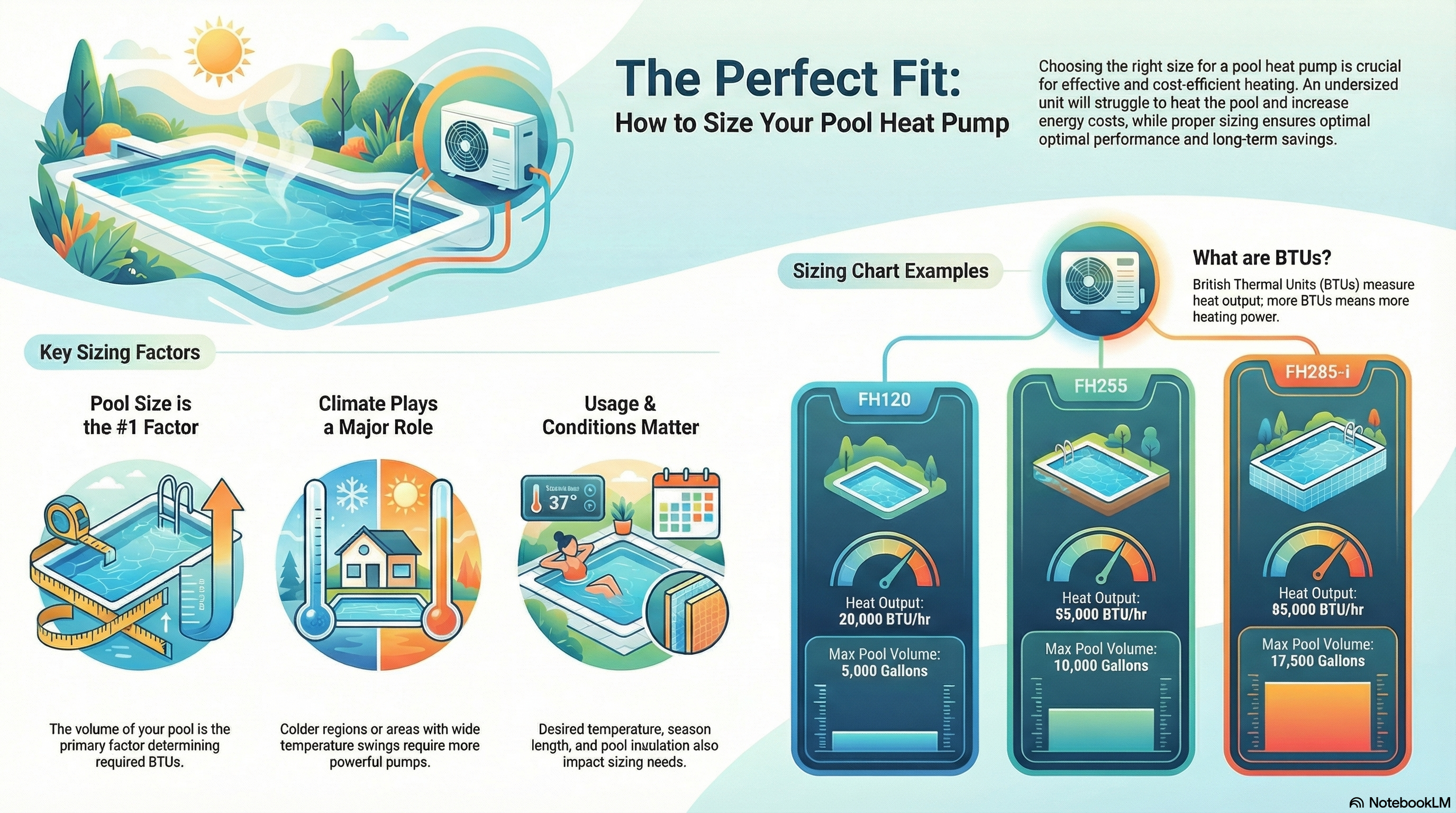
How to Size Your Heat Pump - The 5 Factors
Choosing the right size heat pump for you results in efficient heating (or cooling) without overworking the unit or spiking your energy bills. Let’s go through the key factors:
1. Pool Volume: How many gallons of water are in your pool?
Picking a heat pump that is too big for your pool wastes energy, but picking one that is too small means slow heating.Use the formulas below, or skip further dow to use our visual sizing guide to find out how many gallons are in your pool.
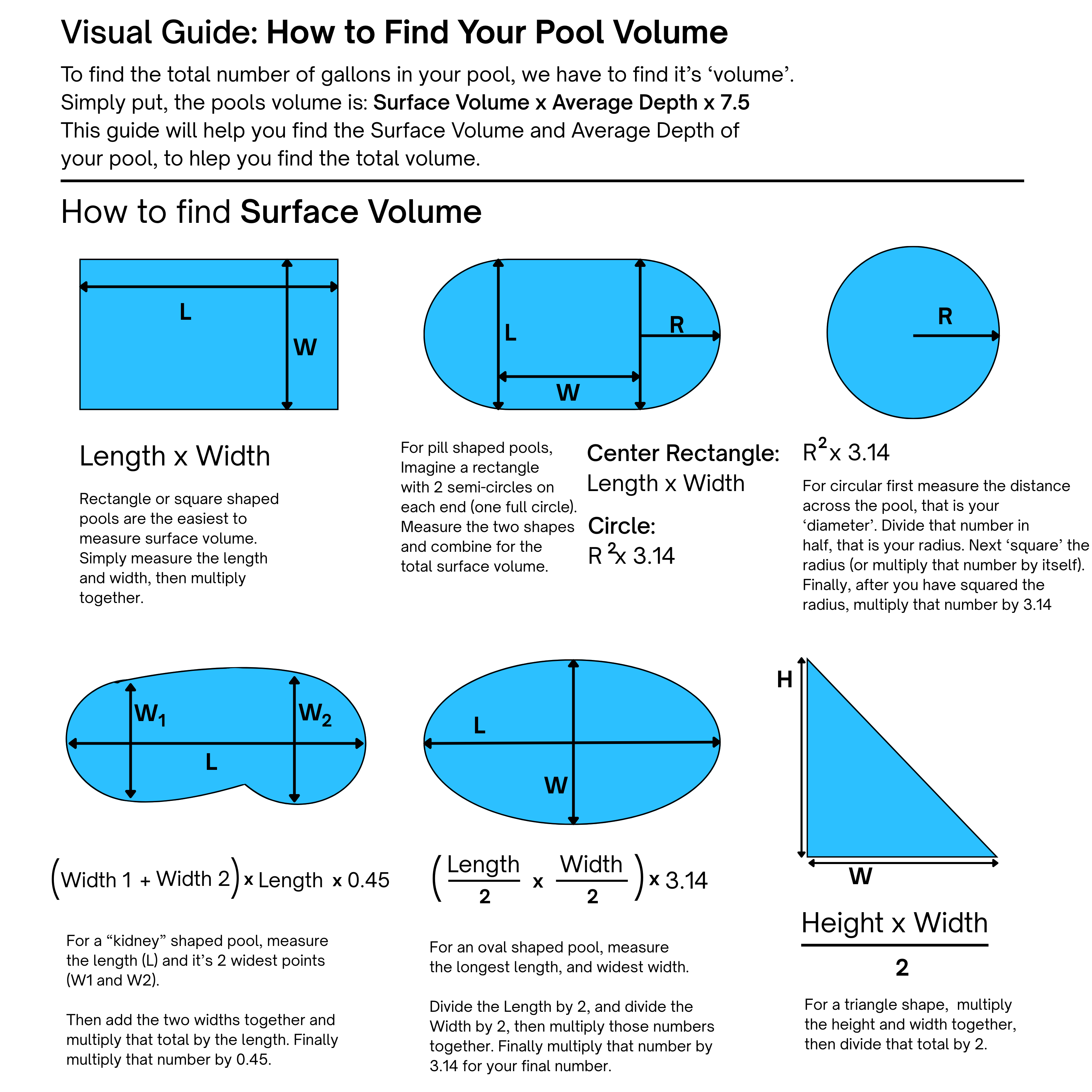
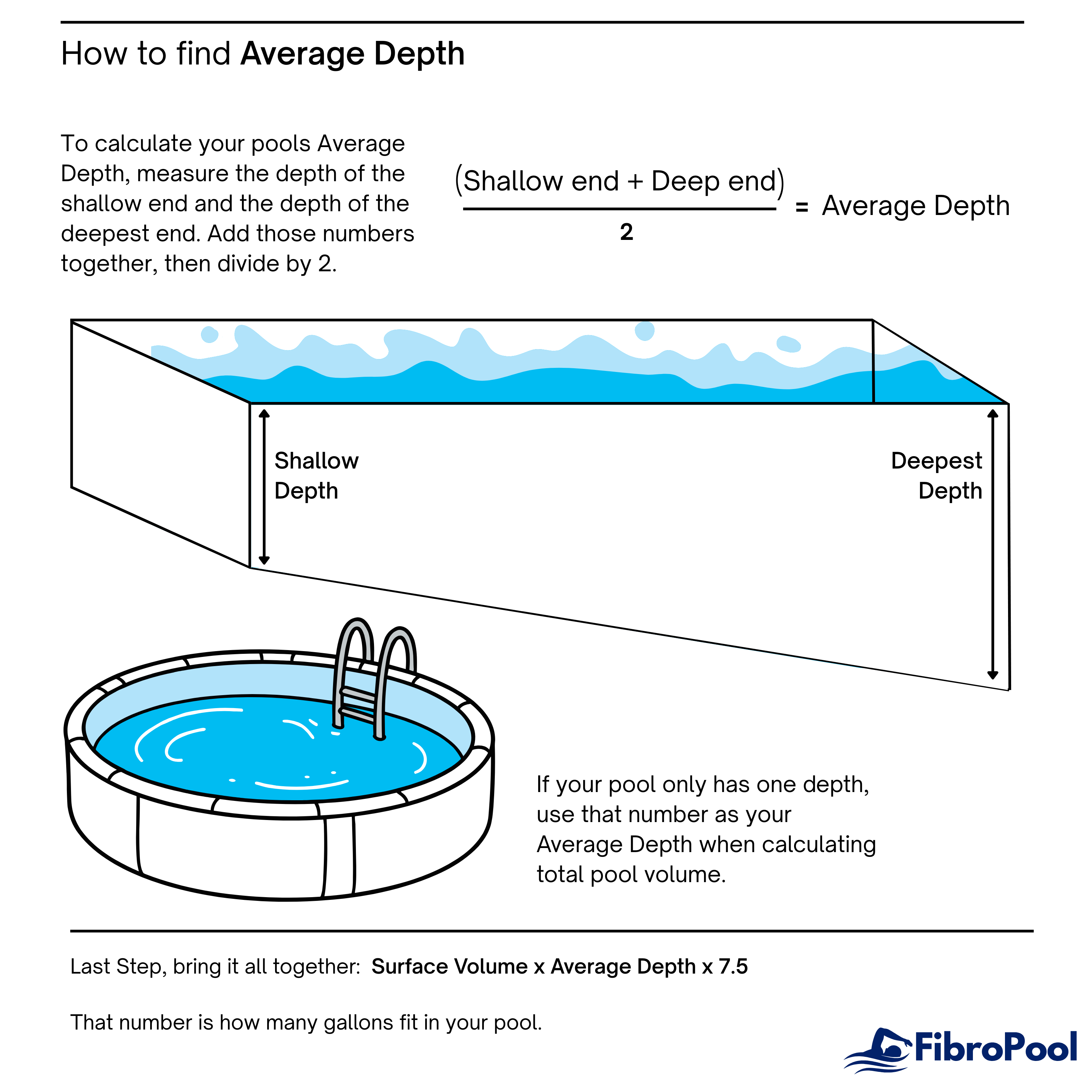
Note: The number of gallons in your pool is determined by multiplying the surface volume and the average depth, then multiplying that number by 7.5. The average depth is shallow end + deep end divided by 2. For irregular pools, break into sections (e.g., rectangular + round) and add up. (Don't worry, visual guides are provided below!)
Rectangular/Square Pools: Length × Width × Average Depth × 7.5
Example: 20ft L × 10ft W × 4ft Avg D = 6,000 gallons
Round/Circular Pools: Diameter × Diameter × Average Depth × 5.9
Example: 15ft Diameter × 3.5ft Avg D = about 4,600 gallons
Oval Pools: Long Diameter (Length) × Short Diameter (Width) × Average Depth × 5.9
Example: 30ft L × 15ft W × 4ft Avg D = 10,620 gallons
Kidney/Freeform Pools: Approximate as (Longest Length × Widest Width × 0.45) × Average Depth × 7.5
Example: 30ft L × 15ft W × 4ft Avg D = about 8,100 gallons (adjust for curves)
Irregular/Custom Pools: Divide into basic shapes, calculate each, and sum. Or use our online tool for precision.
Visual Guides: Below are some visual guides to common shapes:
2. Climate: Your location affects efficiency
Heat pumps pull warmth from the air, so warmer/humid spots shine. In cooler/drier areas, you'll want to size up or go with an inverter model.
Humidity Needs: Fibropool heat pumps perform best above 60% relative humidity (optimal 80%+), as moist air holds more latent heat for efficient transfer. Below 50% (e.g., desert climates like Arizona), COP can drop 20-30% due to reduced heat extraction—consider full-inverter models (like FH235-i) that adapt dynamically, or add a pool cover to minimize evaporation losses. High humidity (>90%) can slightly reduce efficiency in extreme cases but generally boosts performance.
Cold Tolerance: Fixed-speed models (e.g., FH120/135) reliably operate down to 55°F air temp; below that, heating slows or stops to avoid icing. Advanced fixed-speed like FH270 handle down to 14°F with built-in defrost cycles. Inverters (FH235-i/285-i) excel in cold, maintaining efficiency to 40°F or lower by varying speed—perfect for extending seasons in northern areas. Always use a cover in cold weather to retain heat; expect 10-15% efficiency drop per 10°F below 70°F.
3. Insulation & Heat Retention: Your pool setup makes a big difference.
The key here, is that your pool is constantly loosing heat, with most heat lost through evaporation. Pool covers reduce heat loss by 50-70%, wind breakers like fences or hedges help reduce heat lost from the wind, and water features also speed up heat loss. An ideal setup would include regular use of a pool cover, wind breakers, and no water features. For each one of those aspects consider whether you check the box or not, and size up accordingly.
4. Desired Temp: How hot do you want it?
Most people aim to heat their pool to between 78-82°F. If your looking for hotter temperatures then you'll want to size up the heat pump you select.
5. Swim Season: How long do you want to use your pool each year?
Are you looking to add some consistency to the summer months? or are you looking to extend your swim season into spring and fall? Maybe you want to swim year round? The longer the swim season you want, the larger the heat pump will need to be.
Sizing Chart & Quick Calculator
Use this chart as a starting point (based on up to 15,000-17,500 gal in mild climates; add 20% for cold areas or no cover). To find the right size heat pump:
Find your pool volume.
Consider the other 4 factors: Your climate, heat retention, desired temp, and swim season goal.
Start with your pool size, and size up based on the 4 Factors
Example: 10,000 gal in moderate climate → FH255 (55k BTU) x 1.1 = ~60k effective—perfect fit.
| Model | Heat Output (BTU) | Pool Volume (Gallons) | Technology | COP | Dimensions (in) | Noise (dB) |
|---|---|---|---|---|---|---|
| FH120 | 20,000 | Up to 5,000 | Fixed-Speed | 4.81 | 16 × 40 × 24 | 55 |
| FH220 | 20,000 | Up to 5,000 | Fixed-Speed | 4.81 | 16 × 40 × 24 | 45 |
| FH135 | 35,000 | Up to 7,500 | Fixed-Speed | 4.01 | 16 × 40 × 24 | 47 |
| FH235-i | 35,000 | Up to 7,500 | Full Inverter | 4.9 | 21 × 21 × 26 | 45 |
| FH255 | 55,000 | Up to 10,000 | Fixed-Speed | 5.92 | 40 × 16 × 24 | 47 |
| FH270 | 70,000 | Up to 15,000 | Fixed-Speed | 5.34 | 42 × 16 × 32 | 61 |
| FH285-i | 62,000 | Up to 17,500 | Full Inverter | 4.67 | 21 × 21 × 26 | 45 |
Pro Tip: Full Inverter models (like the FH235-i and FH285-i) are the most efficient and quietest options, especially in variable climates or when you want to extend your swim season. They adjust speed automatically for better COP and lower energy bills — highly recommended if your 5-factor sizing score is 2 or higher.
Pro Tip: Inverters like FH235-i/285-i adjust speed for 30-50% energy savings vs fixed—great for variable weather. All use titanium exchangers for salt/chlorine resistance, R410A/R32 refrigerant.
Again, we put together this sizing quiz to make picking the right heat pump easy: https://fibropool.com/#quiz-PMHyRv