
Winterization: How to Winterize your Heat PumpUpdated 7 months ago
When your swim season ends, it's important to prepare your Heat Pump for the winter weather. The biggest risk in winter, is that if you have standing water inside your heat pump, it could freeze and expand causing your unit to break.
Winterizing your heat pump comes down to a few core targets:
- Remove all water from the pump
- Prevent animals and bugs from making a winter home inside the heat pump
- Prevent winter weather from damaging the pump
And yes, we've seen all of these things happen in the past. Thankfully, the winterization process is simple.
Winterizing is crucial because leftover water can freeze and expand up to 9%, cracking internal parts like the heat exchanger or pipes, leading to costly repairs or full replacements. Do this when temperatures hit below 50°F; it's quick (30-60 min) and protects your warranty. If unsure, contact a pro.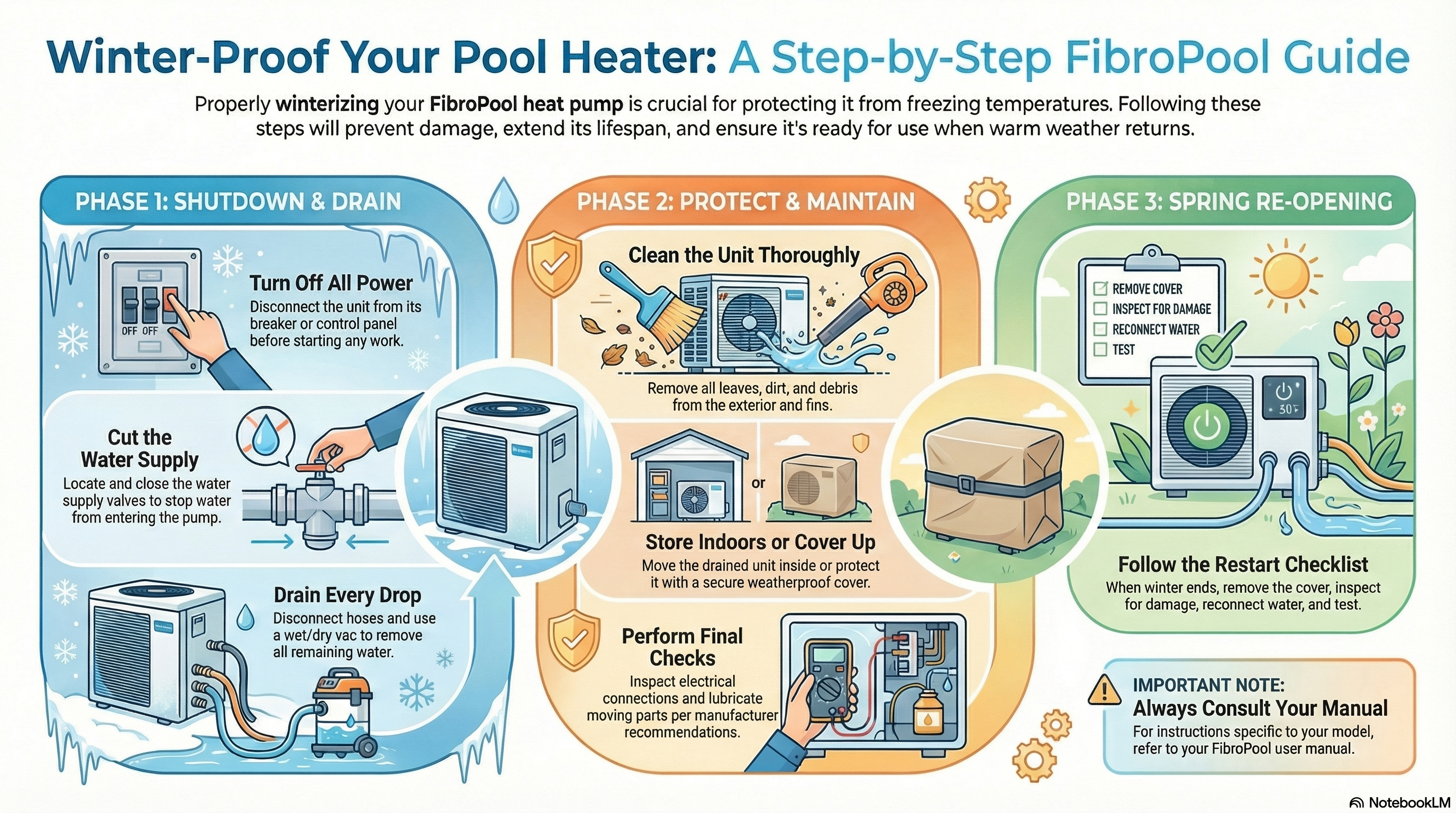
Step-by-Step Guide
Turn Off Pump & Breaker: Turn off the heat pump and then the cut power at the breaker, safety first. If you're not using a bypass, then the pool pump should be turned off too.
Drain the Heat Pump Thoroughly: Key to avoiding freeze damage.
Isolate with bypass valves (close to unit, open bypass).
Disconnect inlet/outlet unions.
Open all drains/valves; let gravity do the work, then tilt unit if needed.
Use a wet/dry vac to suck out every last drop from the exchanger, lines, and low points.
Plug the Inlet & Outlet: Plug up the plumbing connections with rubber plugs or rags to prevent vermin and rain/snow from entering the heat exchanger.
- Clean the Unit: Hose fins (use a gentle spray and always from the inside out) and remove any debris.
- Store or Cover: Storing indoors is best (garage/basement); if outdoors, secure with a breathable tarp and check monthly.
Model Notes
All: Drain the titanium exchanger fully.
Inverters: Dry the electronics extra carefully.
FH270: Heavier unit, team lift if moving for storage.