
Bypass - Do I need one?Updated 7 months ago
A bypass is the easiest way to make your heat pump run better, last longer, and avoid most of the common headaches. It’s a simple plumbing detour that lets you control exactly how much water goes through the Heat Pump instead of forcing all of it through.
Too much water flow leads to poor heating, too little leads to 'flow' errors.
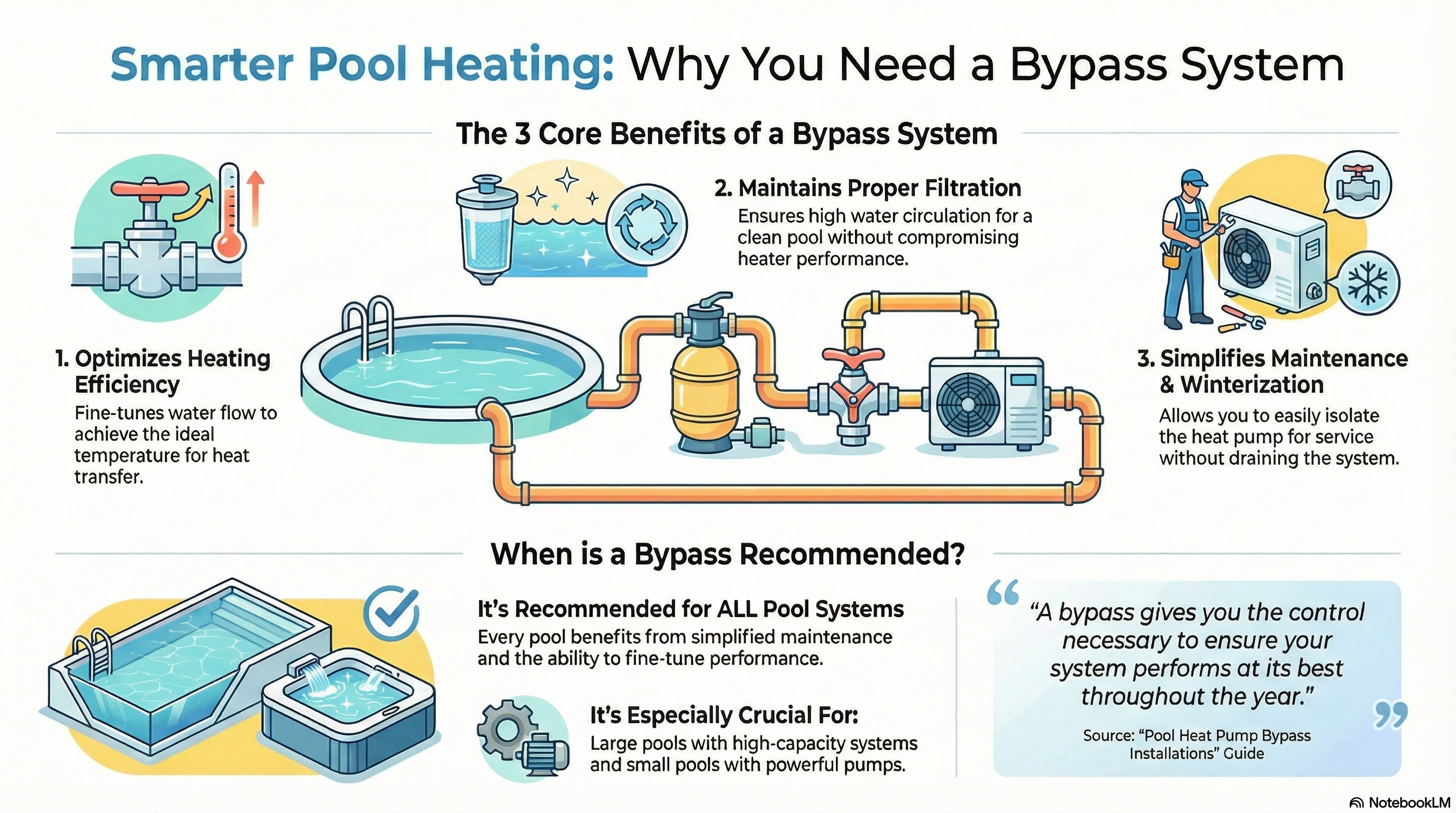
Think of your pool pump like a fire hose. It pushes a lot of water, sometimes more than the heat pump can handle efficiently. Without a bypass, that fast-moving water rushes through the heater too quickly, so it barely picks up any heat. Or if the water flow gets too low (dirty filter, valve issue), the heater shuts off to protect itself. A bypass fixes both problems with one small upgrade.
The Main Problems a Bypass Solves
Water Moves Too Fast (High Flow)
Most pool pumps (especially 1.5 HP or larger) push 50 - 100+ gallons per minute.
Heat pumps like ours work best at 23–33 GPM.
Too fast = water doesn’t have time to warm up → slow or no heating, wasted energy.
A bypass lets you send only the right amount through the heater and reroute the rest back to the pool.
Water Moves Too Slow (Low Flow)
Dirty filter, closed valve, or air in lines = not enough flow.
Heater sees low flow → EE03/PL error, unit shuts down.
Bypass makes it easy to isolate and adjust flow without stopping the whole system.
Maintenance & Winterization Become a Pain
Without a bypass, you have to drain the entire plumbing system to service the heater or winterize.
With a bypass, just close two valves and the heater is isolated. No need to fully drain the whole system.
Keeps Your Filter Working Right
With no bypass, if you throttle the main pump to slow down the water flow for the heater, the rest of the system suffers (poor filtration, cloudy water).
A bypass lets the pump run full speed (good for filter) while you set the perfect water flow rate for the heater.
Real-World Examples
Above-ground pool with Intex-style hoses: Pump pushes too much → heater can’t keep up. Bypass fixes it in 30 minutes.
In-ground pool with 2 HP pump: High flow triggers flow errors or weak heating. Bypass solves it permanently.
Winter prep: Close valves, drain only the heater—done in 10 minutes instead of hours.
When You Really Need a Bypass (Quick Checklist)
Your pump is 1 HP or bigger (most in-ground and many above-ground setups).
You have 2-inch or larger plumbing.
You get flow-related errors (EE03, PL, etc.).
Heating feels slow even though the unit is running.
You plan to winterize or do regular maintenance.
If two or more of those sound like you, a bypass is one of the best upgrades you can make, it’s cheap, simple, and it pays for itself in better performance and fewer headaches.
We sell pre-assembled bypass kits that make the installation easy.