
How to Install and Set Up Your Pool PumpUpdated 7 months ago
Installing a pool pump involves both plumbing and electrical work, which can be dangerous if not done correctly. Improper installation can create safety hazards, cause leaks, damage equipment, or void your warranty. Local electrical codes and permits often apply.
We strongly recommend having a licensed electrician and qualified pool professional handle the installation — especially for hardwired (FP series) models.
This guide is here to help you understand the process, prepare your site in advance, gather the right materials, and communicate confidently with your installer. If you’re an experienced DIYer and comfortable with electrical/plumbing work, the plug-and-play ABG series models are more DIY-friendly — but always follow the manual and local codes exactly.
Installing a FibroPool pool pump is pretty straightforward—it's the engine that keeps your water moving and clean—but doing it right avoids headaches like air locks or trips. We'll walk you through step by step, with safety first.
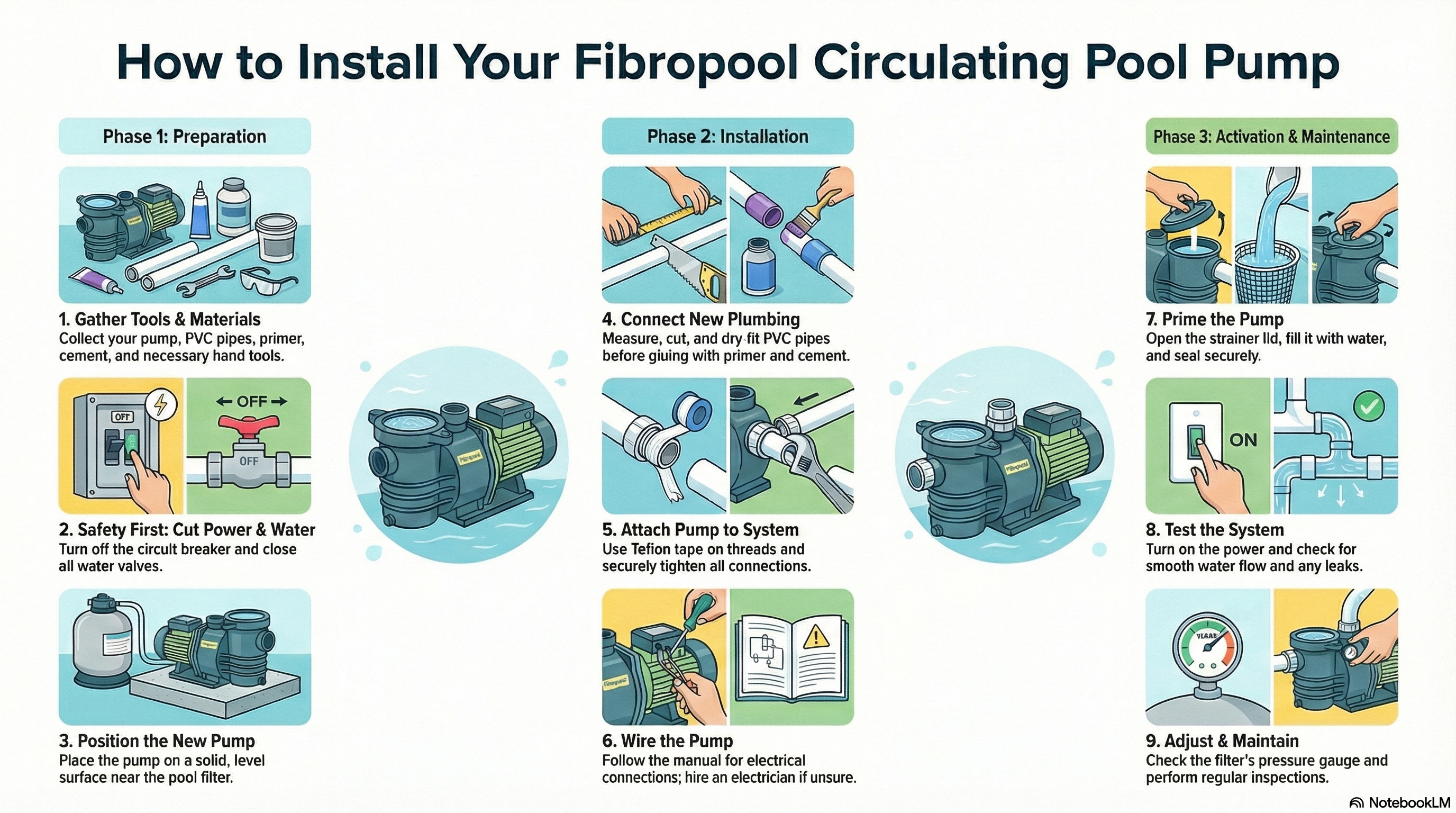
Important Disclaimer: Power off everything at the breaker before starting. For wiring (especially FP series), hire a licensed electrician if you're not certified. A wrong setup can cause shocks, damage the pump, or void warranty. Local codes matter too; when in doubt, call a pro.
This guide covers ABG series (above-ground, plug-ins) and FP series (in-ground, hardwired).
Tools needed: Pipe cutter, PVC glue/primer, wrench, screwdriver, multimeter (for voltage checks).
Before You Start: Prep & Safety
Unpack and check for damage. Place pump on a solid, level base (like concrete or blocks)—must be lower than pool water level to self-prime (suck water in easily). Why? High spots trap air, causing dry runs that burn the motor.
Model Notes: ABG series (lighter, 50-100 lbs) fits small pads; FP series (heavier) needs sturdier base for vibration.
GFCI Tip: All need protected circuits—ABG plugs into GFCI outlet; FP hardwires to GFCI breaker if code requires.
Step-by-Step Installation
Turn Off Power & Water: Flip breaker, close valves—drain lines if replacing old pump. Why? Safety from shocks or floods.
Position the Pump: Use a level spot near the pool filter, 12 inches clearance all around for air. Install gate valve in front (controls flow).
Model Notes: ABG: Short hoses (6ft max) to avoid loss; FP: Longer runs okay but add unions for easy removal.
Connect Plumbing: Cut PVC pipes (1.5-2" depending on model), dry-fit, glue with primer. Inlet from skimmer, outlet to filter/heater.
Model Notes: ABG: Molded thread stops—don't over-screw; FP: Self-priming but test for air bubbles on higher HP.
Wire the Pump: Follow manual—secure connections.
ABG Series: Plug into dedicated GFCI 115V outlet—test voltage (110-120V).
FP Series: Hardwire 115/230V (dual on some)—electrician recommended; no neutral, ground to lug.
Why? Wrong voltage fries motors—use multimeter.
Prime the Pump: Fill basket with water, close lid tight. Why? Removes air for smooth start.
Model Notes: FP higher HP primes faster but check for leaks on dual voltage.
Test & Adjust: Power on—check flow, no leaks/noise. Run 5-10 min.
Model Notes: ABG: Quiet hum; FP: May have timer—set for 6-8 hour cycles.
Setup Tips & Troubleshooting
Common Issues: No prime? Check level/height. Trips? Shared circuit—dedicate it.
Maintenance Setup: Add timer for auto-runs; clean basket weekly.
Model Notes: ABG: Above-ground focus—short hoses reduce loss; FP: In-ground—handle longer pipes but watch TDH (resistance).
If there are any errors or you have any doubts, snap some photos and contact support.