
Heating and Cooling Performance: Why isn't my pool temperature changing? copyUpdated 6 months ago
Your Fibropool heat pump is designed to keep your water comfy by extracting heat from the air, but if the temp isn't budging as expected, it's usually something fixable like environment or setup. We'll guide you through the common culprits step-by-step. Most "not heating" issues are resolved without tools.
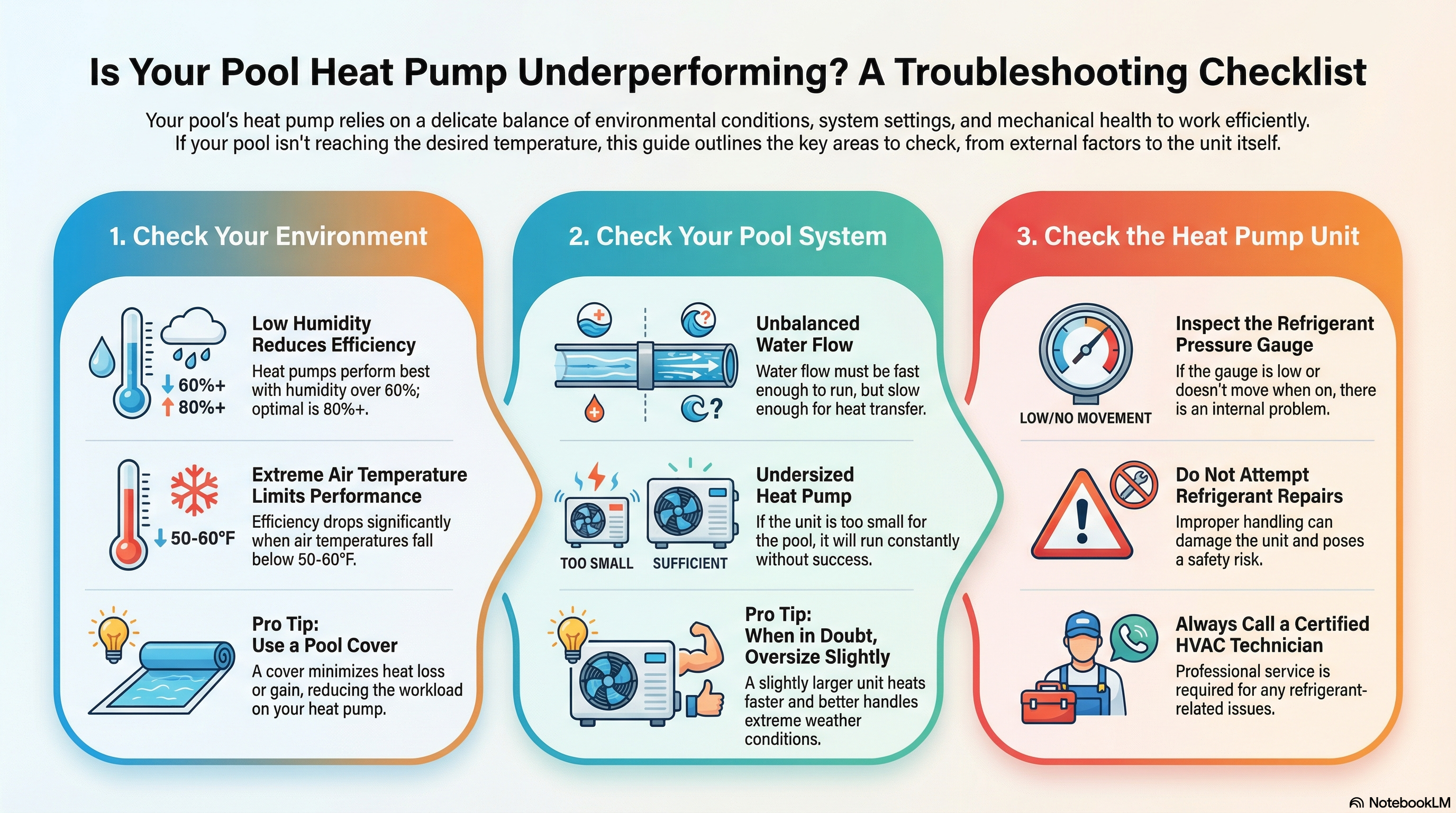
How to Know It's Working & What to Expect
Before troubleshooting, let's set realistic expectations—heat pumps aren't instant like gas heaters; they're more efficient but the start is gradual. Even in ideal conditions (80°F air, 80% humidity, covered pool), when you first turn your heat pump on it can take 1-3 days to go from 70°F to 82°F on a 10k gal pool. After you've reached your target temp, you can expect 8-12 hours runtime daily to maintain the pool temperature (less when using a pool cover). Colder or drier weather slows this down, so if it’s cold or dry outside, then patience is key!
To verify it's running:
Fan blowing cold air: After the unit has been on for 5 minutes, you should feel cool exhaust from the fan. This means heat's being transferred to your water.
Condensation dripping: Water from the bottom drains after 10-15 minutes? That's normal moisture from the air, a good sign of active operation.
Pressure gauge rising: When the compressor kicks in, the gauge will jump ~0.5 MPa (or visibly increases), this confirms the refrigerant circulation.
If you see these signals, but the pool temp is still low, it's likely working fine and just needs time. If you see none of these signs? Then check power/flow and restart the heat pump (turn off at the breaker for 45 sec).
The factors below are the most common reasons your heat pump may be taking longer to heat your pool than expected.
Environmental Factors
Low Humidity: Best above 60% (optimal 80%+ for max heat transfer). Below 50%? COP drops 20-30% from evaporation, add a pool cover or place misters near the heat pump coils.
Ambient Air Temperature: Efficiency ties to air warmth. If the temp is below 50-60°F, then heating will take longer.
Pool Cover: Using one will cut heat loss by 50-70%.
Water Flow & System Factors
Flow Rate: Too low or too high = poor heat transfer. Aim for 23-33 GPM (gallons per minute).
Pool Size/Pump Match: An undersized heat pump or a weak pool pump slows everything down. Check out our Sizing Guide if you're unsure.
Heat Pump Issues
Pressure Gauge Low or No Move: Indicates refrigerant or compressor trouble. For anything refrigerant related, you will need to use a professional. This is a good reason to contact our support team. Critical Warning: Do not tamper with refrigerant (like adding Freon or leak fixes)—leave that to certified HVAC pros to prevent damage, warranty issues, or safety risks.
Maintenance: Dirty or clogged fins or fan can lead to poor perfromance. Clean yearly with hose or coil cleaner. If rinsing with water, be sure to gently spray from the inside out.
Model Notes
Fixed-speed: Steady but expect 1-2°F/day—great in consistent weather.
Inverters: Smarter adjustment for 30-50% better efficiency in variables.
Start with a basic check: Ensure there is strong water flow (pump running, filter clean, bypass in correct position), then check the pressure gauge—it should climb when the unit's on. If all those checks pass, then give it time. The first heating can take up to 3 days.
Low/zero gauge or you're still stuck? See our Error Codes article in the Help Center, or use our chat to connect with support.